
Small Cities Initiative helps hometown utilities tackle complex projects
July 15, 2026Every day, small municipal utilities are asked to do more with less.
Limited staffing, tight budgets, and a lack of specialized resources can make even routine projects difficult. Sometimes, all it takes is one unfamiliar project to expose the limits of what a small crew can reasonably tackle on its own.
Other times, communities know improvements are needed but struggle to find the time, expertise, or financial capacity to move them forward, making the work more daunting with each passing year.
The Small Cities Initiative from Minnesota Municipal Utilities Association (MMUA) was created to help communities meet those challenges while preserving local control.
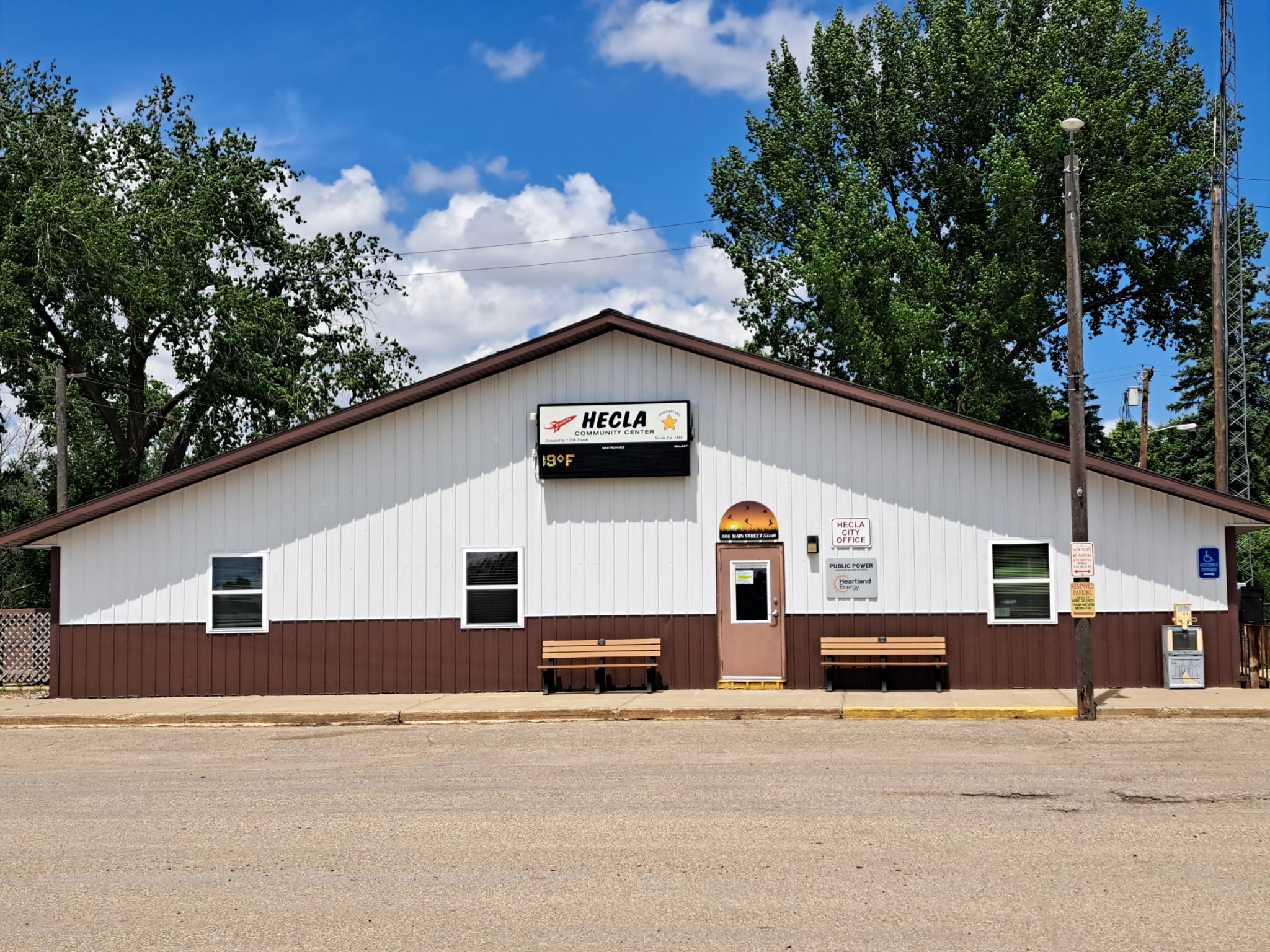
When the city of Hecla, South Dakota, agreed to serve a rebuilt fertilizer plant with higher-amp service, the arrangement seemed straightforward enough. The customer would pay for the major equipment, city staff would feed the new facility, and the project would move ahead.
Then the work became something Hecla had never done before: installing its first stretch of underground primary.
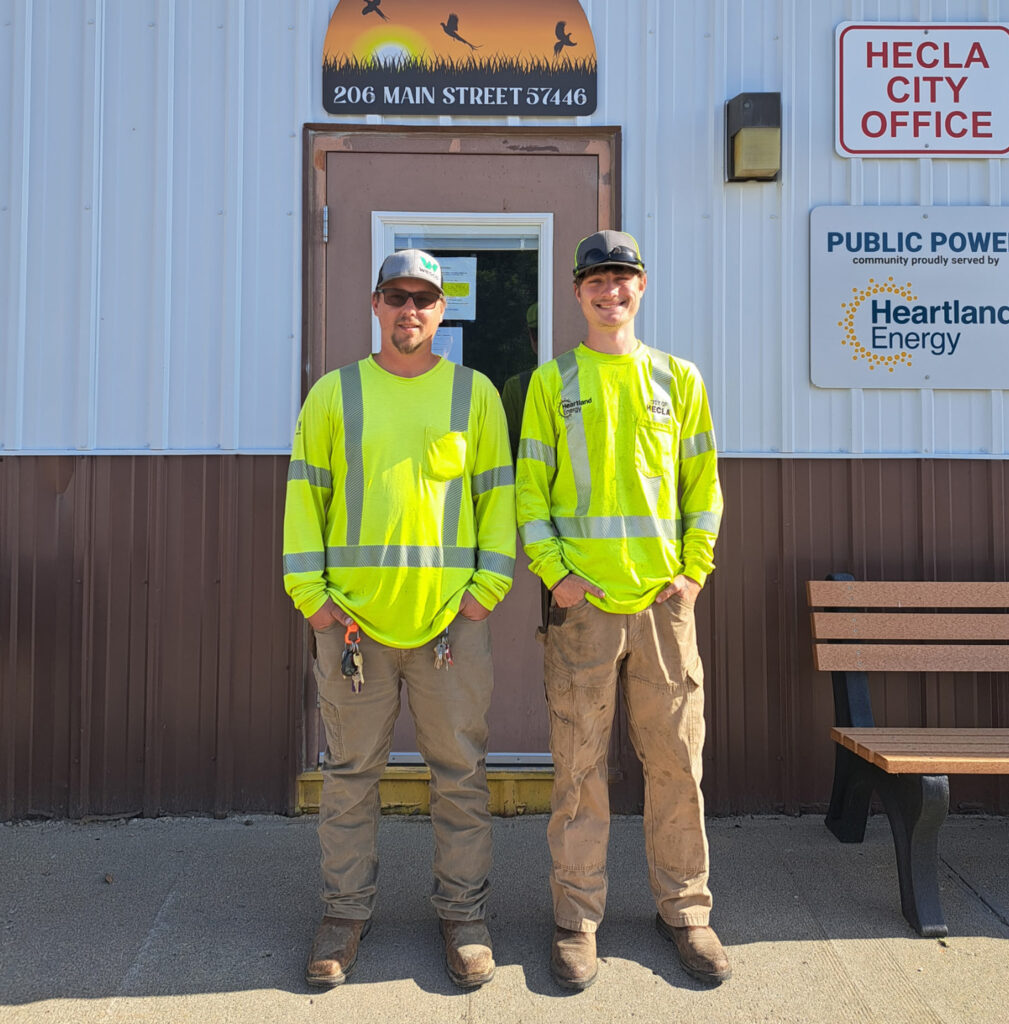
Jacob Lilla, the city’s utility lineworker, said he quickly realized the job had outgrown his experience.
The town had no underground system in place, and the line under construction also served a nearby feed mill that could not be shut down for long. For Jacob, that meant the project was not just unfamiliar. It was risky.
“I had no idea what I was doing,” Lilla said. “I didn’t even know where to begin.”
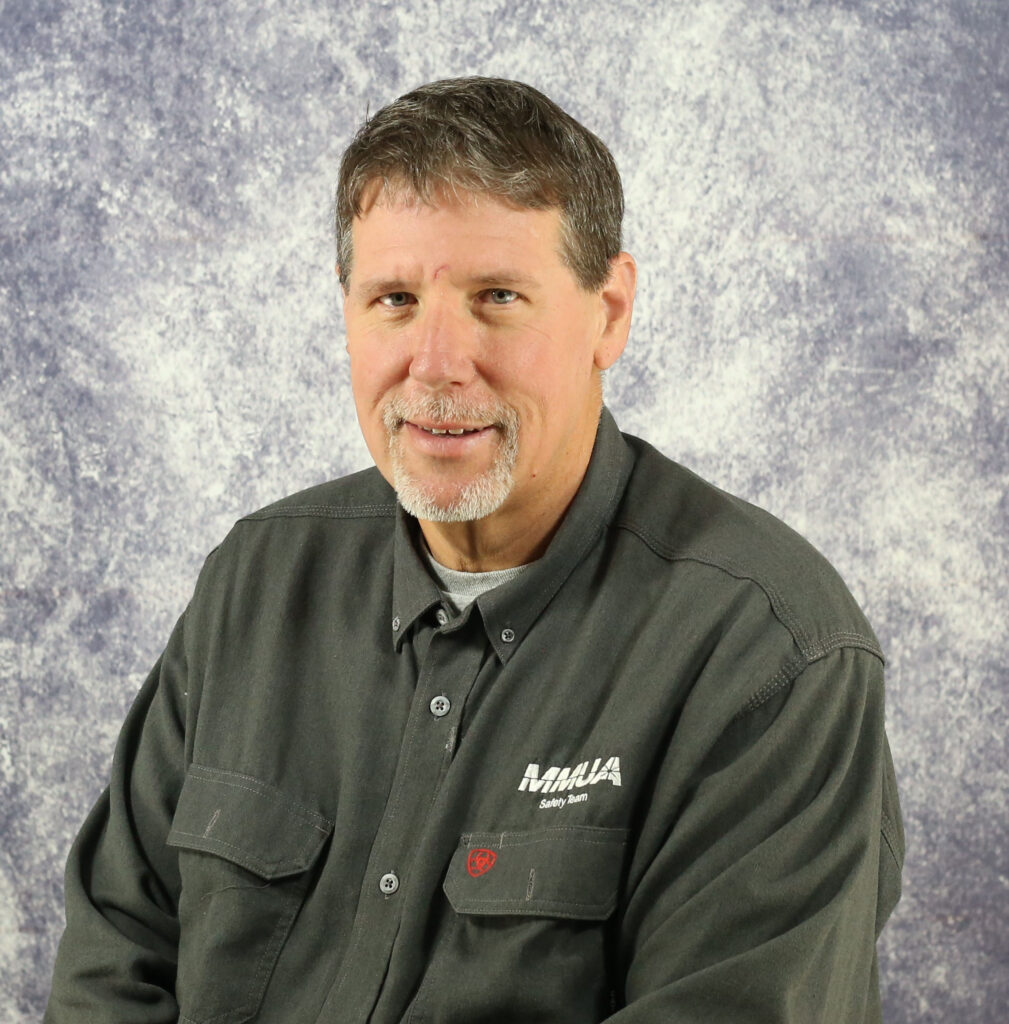
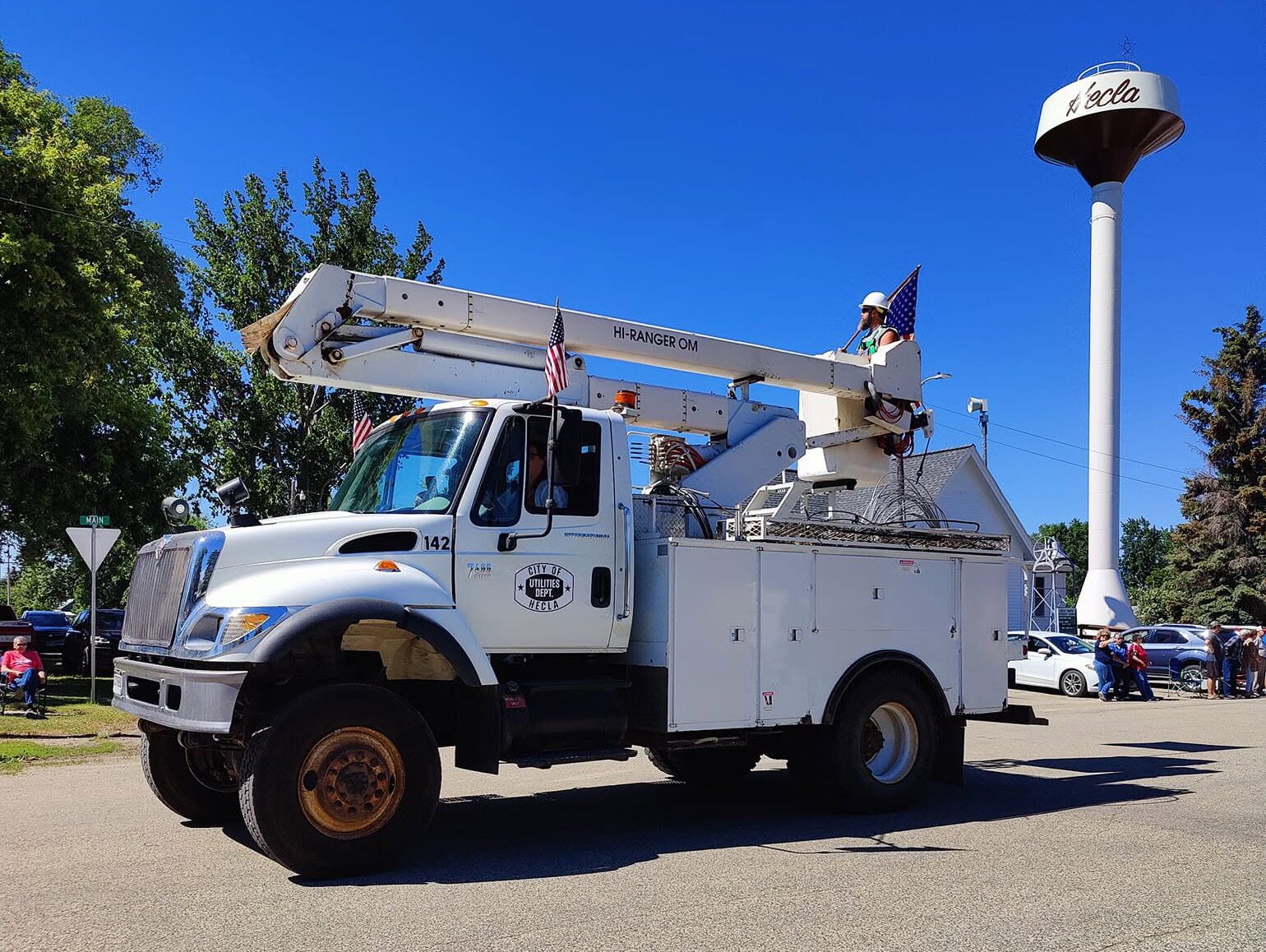
So he called Roger Avelsgard, MMUA’s Apprenticeship trainer, who drove from Minnesota to Hecla, looked over the project, and developed a plan. The following week, with support from the South Dakota communities of Langford and Groton, crews completed the work in about four days.
For Lilla, the experience became an example of what small municipal utilities can gain from outside support at the right moment: technical expertise, extra hands, and a safer path through work that might otherwise be too complex to tackle alone.
“With Roger’s expertise and miles of knowledge, we knocked it out in about four days and got it all put together,” Lilla says, going on to observe that without MMUA’s help, he could have put himself in serious danger trying to complete the project on his own.
Harnessing the spirit of mutual aid
Municipal utilities have a long history of showing up to help one another, whether the need arises from the dark days of a disaster requiring mutual aid or during routine operations when an equipment loan makes all the difference.
So when MMUA’s Board and leadership team considered ways to be more supportive of smaller utilities, they knew this essential aspect of municipal culture had to be the linchpin.
MMUA CEO Karleen Kos says, “I have always been impressed by how quickly and selflessly municipalities step up when someone is in need. Our smallest utilities may not face a tornado or ice storm every day, but they do face real challenges. Limited staffing, financial constraints, and difficulty finding contractors willing to take on small projects can make it hard to maintain utility systems and respond to customer requests like the one in Hecla. Sometimes, simply keeping infrastructure up to date is a struggle. Challenges like these create an opportunity for communities to come together, support one another, and help their neighbors preserve local control.”
During its 2025-26 planning sessions, the Board of Directors agreed, suggesting that MMUA find a sustainable way to support small utilities. Developing a Small Cities Initiative thus made its way into MMUA’s 2026 operational plan.
Challenge accepted
Director of Training and Safety Mike Willetts and Apprenticeship Instructor Roger Avelsgard had already been thinking about the idea, even before the Board formalized its action. They knew municipal personnel would be willing to help, and that dozens of apprentices could benefit from the real-world training opportunities that would result from potential projects.
The main question was how the program should be structured.
Although the concept emerged from thinking about mutual aid, the program is not structured the same way. When crews come together through traditional mutual aid, differing pay practices and expectations among utilities can make it difficult for small cities to predict costs.
Through the Small Cities Initiative, participating utilities are reimbursed for their regular costs, without the premium structures that sometimes accompany mutual aid deployments. That approach makes a big difference for smaller member communities that may need construction help but cannot absorb large contractor costs or unexpected labor premiums.
In speaking about how participating utilities that step up to help will be compensated, Willetts says, “Whatever you’re normally being paid, we want to make sure you receive that and are whole.”
He goes on to say, “MMUA will have to cover its costs too, but we’re not looking to make a big profit over it. The goals here are to help our neighbors, train the next generation, and strengthen the municipal model.”
So far, MMUA has helped complete a small number of projects with limited scope, like the one in Hecla. The work has focused primarily on electric line construction and system improvement projects, but the broader idea is simple: give small utilities practical ways to complete necessary work without giving up on public power.
Training apprentices through real work
A key part of the initiative is its connection to MMUA’s apprenticeship program. In some cases, project work in member communities can give apprentices hands-on experience that counts toward the time they might otherwise spend at the Marshall Training Center or simply in their own hometowns.
“It can be done a couple of ways with apprentices,” Willetts says, explaining that local project work can become part of an apprentice’s training path.
For smaller jobs, apprentices can work alongside experienced staff on design, engineering, and installation. For larger or more specialized projects, MMUA can help assemble line crews while still building training opportunities into the work when appropriate.
That dual purpose—meeting a city’s immediate infrastructure needs while helping train the next generation of utility workers—is central to the program’s value.
If apprentices are involved, the recipient city may still need to purchase equipment and materials, but the labor can function as part of the training program rather than as a full-cost contracted service.
For communities with limited budgets, this can make funding the work more attainable while also helping apprentices log meaningful field hours.
Preserving public power in small communities
Underlying the initiative is a challenge familiar across public power systems, especially in small towns: turnover. When experienced workers leave for better pay elsewhere, communities can struggle to maintain staffing levels and technical capacity.
Willetts says those staffing gaps can create pressure on city councils that are already questioning whether they can continue operating their own utility systems.
“I’ve seen it many times where council says, ‘We can’t hire anybody, so why are we even doing this?’” he said. “So we can fill those gaps … we’re trying to preserve public power and train the next generation.”
By offering project-based support and apprenticeship opportunities, MMUA gives member utilities another option between doing nothing and outsourcing the work entirely. In practice, that can buy communities time to hire, train, or rebuild their own local capacity.
Another layer of support: interim leadership
The same philosophy extends beyond line work. MMUA has also stepped in to help fill interim leadership roles when member utilities lose a general manager or other key leader unexpectedly and need time to stabilize operations.
Willetts described those assignments as temporary bridges meant to help communities reach a sustainable next step, not long-term management arrangements.
“We’re not in it to do it forever,” he said. “We’re in it to help them get to wherever they need to go to sustain.”
Taken together, the project support model, apprenticeship opportunities, and interim leadership work reflect a broader goal: helping small municipal utilities remain capable, safe, and locally governed even when resources are stretched thin.
Looking ahead
The underground installation in Hecla has performed well so far. Lilla says the town is now evaluating a possible upgrade to the oil circuit recloser serving the area as load demands change. It’s exciting to see Hecla’s small system continuing to evaluate options and improve its infrastructure.
After a few pilot tests like the Hecla project, Willetts and Avelsgard are eager to learn more about the needs in other small towns.
“How small is small?” asks Willetts rhetorically when faced with the question about what towns qualify for the initiative. “If they are small enough to ask for help, we’ll pick up the phone. Give us a call and tell us what you’re thinking about. We will see if the Small Towns Initiative is the right fit for your project.”
For MMUA, that means creating practical ways for member communities to solve immediate problems while strengthening the long-term future of hometown utilities in the region. It means carrying out the Association’s mission of supporting and unifying municipal utilities. It means taking seriously the strategic objective of preserving local control, one project at a time.