
CEO’s Report: Public power pays
January 29, 2026More than 55 million Americans receive their electricity from a public power utility, serving roughly 2,000 communities nationwide.
Public power is often defined by benefits such as local control, community focus, and affordability—and those aren’t just talking points. They’re backed by data.
The American Public Power Association’s 2025 Public Power Statistical Report offers a clear look at how public power performs. The following metrics help tell that story.
Public power advantages
Low rates
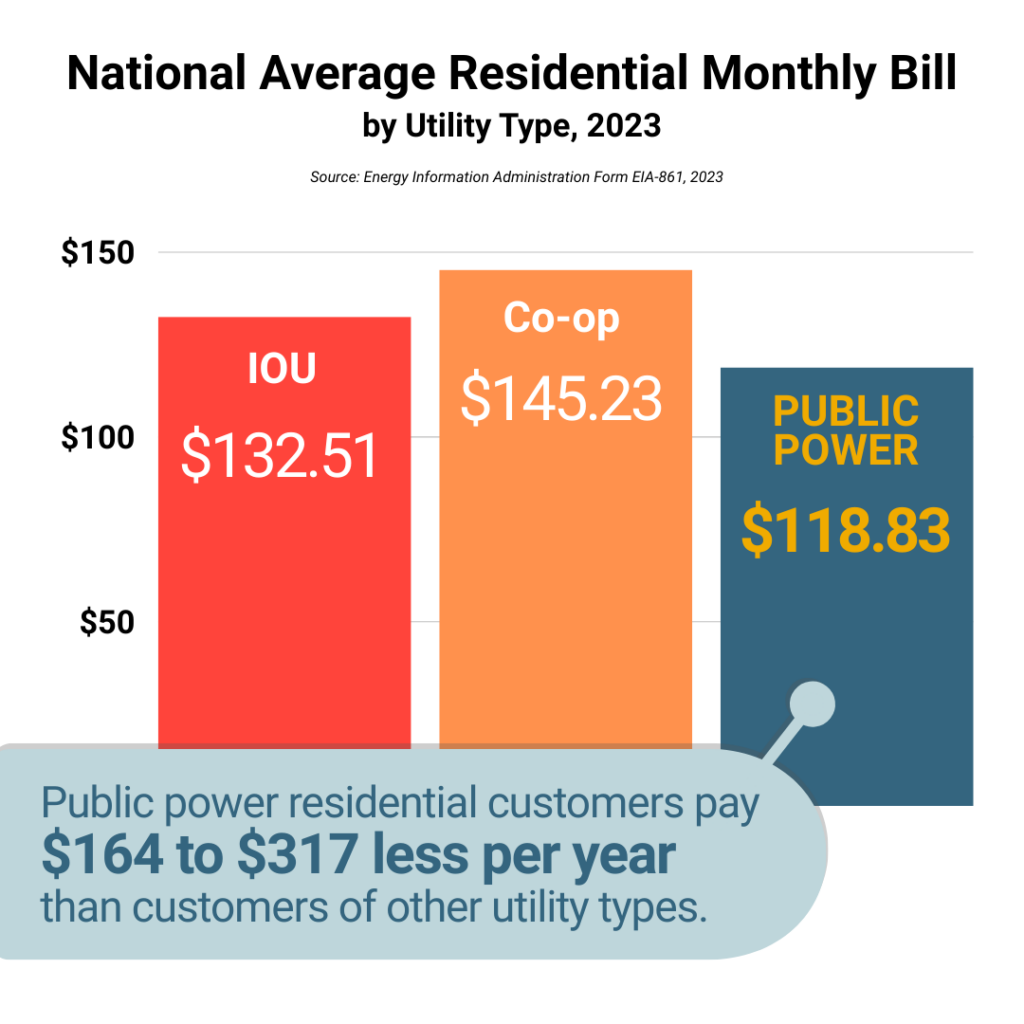 In 34 out of 45 states where data was available, residential customers of public power utilities have the lowest electricity rates of any utility type.
Nationally, public power customers pay 13% less than customers of other utility types.
In South Dakota, Iowa and Nebraska, public power has the lowest average rate out of all utility types. They, along with Minnesota, also have the lowest average bill out of all utility types.
Public power customers in South Dakota and Iowa see average savings between 20-30% over other utility types.
Reliability
Public power utilities on average resolve outages 61% quicker than other utilities when there are no major events.
In 2023, public power customers experienced 1.5 fewer hours without power than customers of other utilities.
Access to tax-exempt financing provides the opportunity for low-cost investment in infrastructure improvements to maintain reliability.
Support for strong local economies
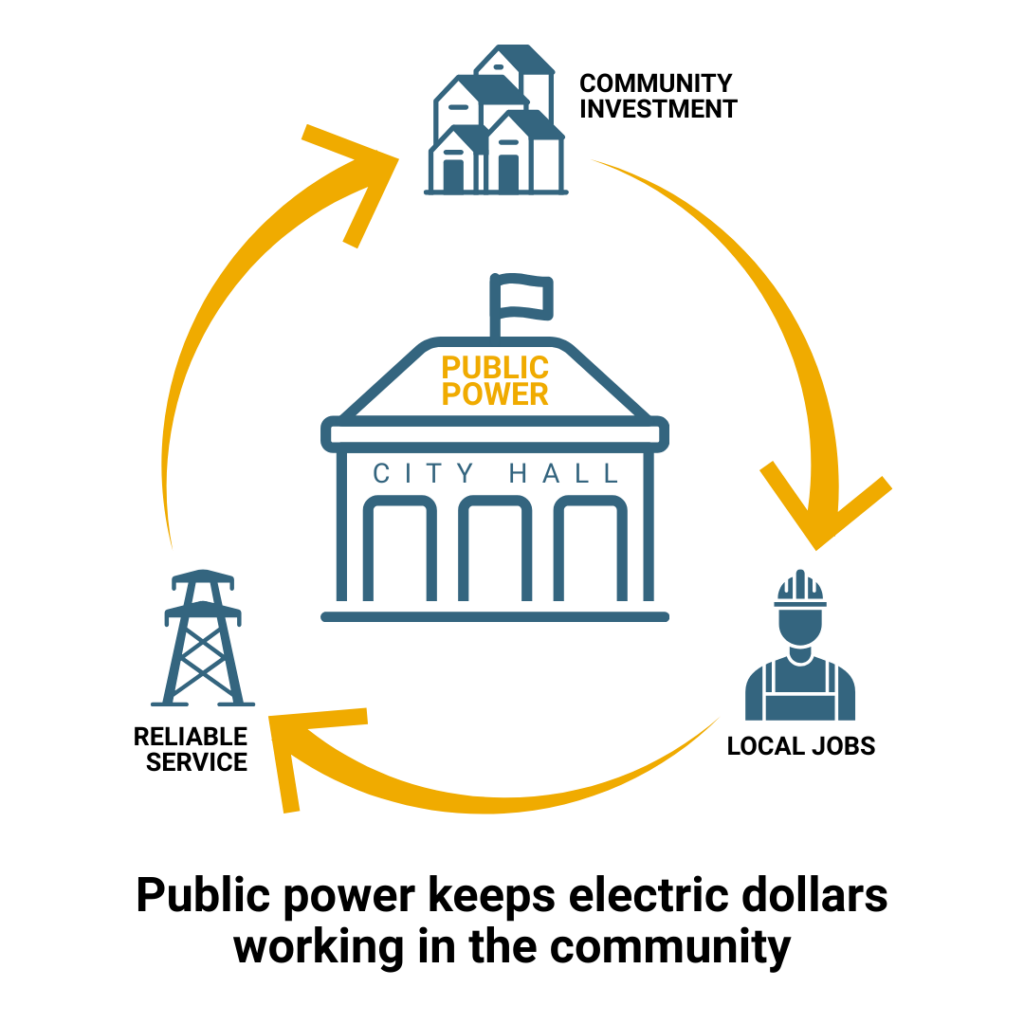 The median public power utility contributes 5.1% of electric operating revenues back to the community it serves. Public power utilities pay 9% more than the average investor-owned utility pays in taxes to state and local governments.
Public power utilities invest in their communities through payments in lieu of taxes, providing hometown jobs, and offering free or reduced electric services for certain facilities such as parks or government buildings.
Communities served by Heartland Energy have access to a variety of programs to support and strengthen local economies, including rebates, incentives, low-interest financing and special rates for large users of electricity.
Diverse generation
Nearly 41% of electricity generated from public power facilities in 2023 was from non-carbon emitting sources, which is higher than the proportion for all generation in the U.S.
For Heartland Energy customers, that diversity includes reliable coal-fired power, wind energy, and peaking units.
Calculating your value
If you haven’t quantified the value of your public power utility, I encourage you to do so. A valuation underscores the core benefits of public power – competitive rates, reliability and a wide range of economic contributions.
Looking at just book assets is not going to tell the whole story. Doing a rate comparison, valuing local jobs and transfers to other funds is a great place to start.
Public power utilities also offer a lot of intangible benefits. Many times, a city has shared services, and the electric utility pays for most of these.
Without the electric utility, the city would have to find these services someplace else.
Public power provides immense value to the communities they serve. Having those benefits quantified and at your fingertips will help you tell your public power story.