
Use a safe word
April 13, 2026A simple way to protect your team and family from AI-powered scams
Scammers have always relied on deception. But today, artificial intelligence is making their tactics harder to spot—and easier to believe.
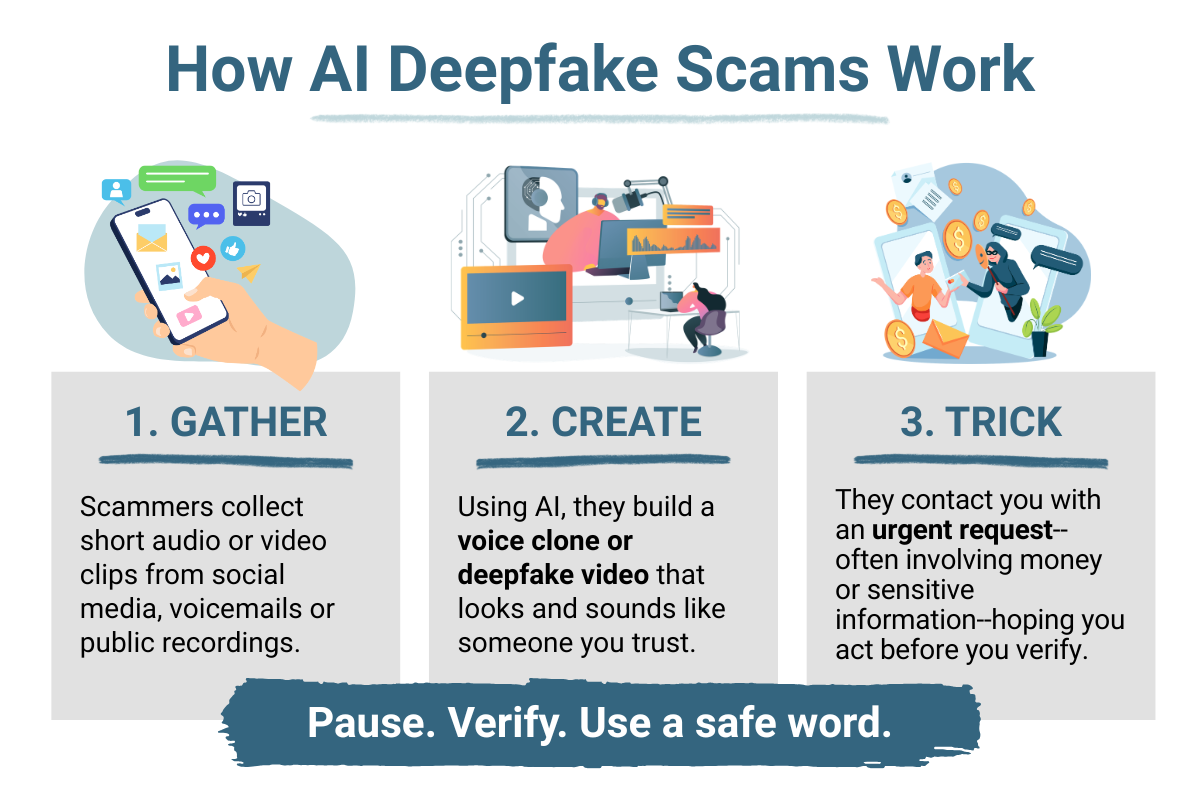
With AI tools, criminals can clone voices and create realistic “deepfake” videos using just a short audio or video clip. That means a call, voicemail, or even a video message could sound and look like a coworker, supervisor or family member.
For local governments and community organizations, the stakes are high. A single convincing message could lead to financial loss, data exposure or reputational damage.
Simple tools like safe words help people slow down, verify and stay in control.
How these scams work
Many AI scams start with urgency.
You might get a call or message that sounds like someone you trust. They say they need help—fast. Maybe it’s a staff member requesting a payment, a colleague asking for sensitive information, or a family member claiming they’re in trouble.
Because the voice sounds real, people act quickly. That’s exactly what scammers want.
With today’s technology, they don’t need much to pull this off. A short audio clip from social media, a public meeting, or a voicemail can be enough to create a convincing fake.
A simple solution: a safe word
A safe word is a shared word or phrase known only to a specific group. It acts as a quick identity check when something feels off.
They’re especially useful in workplaces and communities where trust and quick decisions matter:
- City staff and departments: to confirm financial requests or sensitive information
- Leadership teams: to verify urgent or unusual directives
- Economic development and finance staff: to prevent fraudulent transactions
- Families and caregivers: to protect against common “emergency” scams
Anywhere people rely on calls, texts or virtual communication, a safe word can add a layer of protection.
Safe word setup
Think of your safe word like an emergency plan–it only works if people remember it.
Some helpful tips:
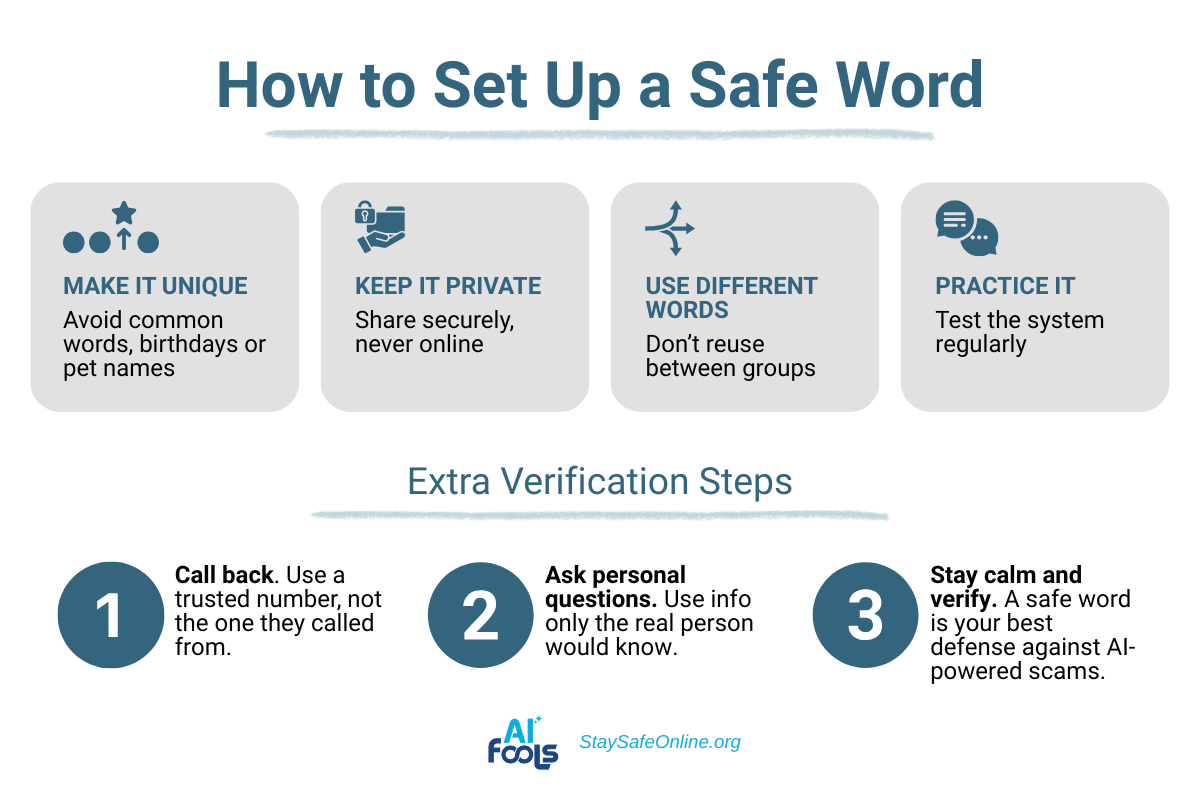
- Make it unique. Choose something hard to guess.
- Keep it private. Share it in person or through a secure method.
- Use different words for different groups. Don’t reuse the same one everywhere.
- Practice it. Make sure everyone knows when and how to use it.
A safe word is a strong first line of defense. Consider pairing it with additional verification steps:
- Call the person back using a number you already trust.
- Ask a question only they would know.
- Pause before taking action, especially when money or sensitive data is involved.
Even a few extra seconds can stop a scam.
Stay sharp
AI-powered scams are designed to create panic and urgency. The best defense is simple, human and proactive.
Take a few minutes to set up a safe word with your team or family. It’s a small step that can prevent a big problem.