Smart holiday shopping online
December 3, 2025Holiday shopping should be fun–not stressful.
But with stores offering deals and countdown sales, it’s easy to rush and click without thinking.
Scammers know the holidays are busy and they count on people being distracted. A few simple habits can help you shop confidently and keep your information safe.
What to watch out for
Online scammers often build fake versions of real store websites. These mimic trusted sites, but use slightly misspelled web addresses, missing contact information, or broken links.
They also send fake emails or texts about shipping issues, special deals, or order updates. These often include malicious links or ask for your personal information.
Be cautious of deals on popular gifts that seem too good to be true. Many are just bait for items that will never arrive.
Social media ads and Marketplace listings can also be risky. Be wary of accounts that are brand new or have no history or reviews.
On small resale or pop-up sites, watch for blurry product photos, vague descriptions, no return policy, or sellers who only accept unusual payment methods. These are all signs you may be dealing with a scam.
How to shop safely online
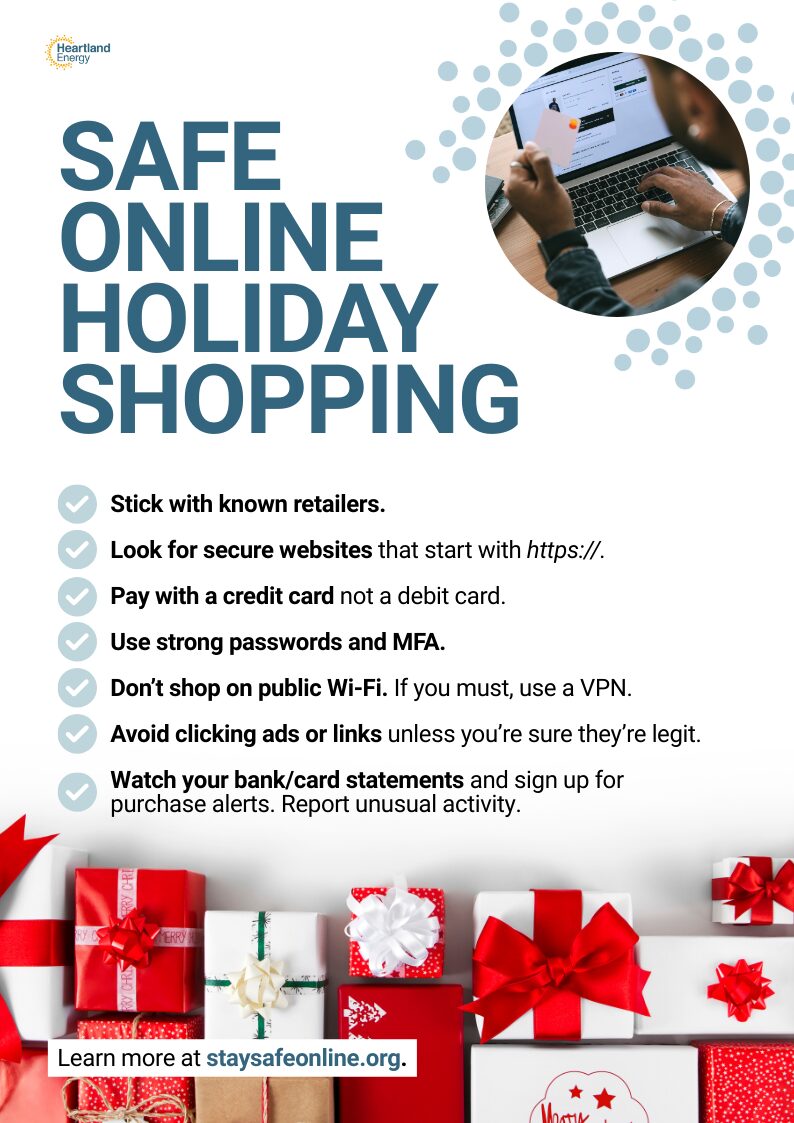
- Stick with known retailers: Use trusted stores or official websites. If a site’s name feels unfamiliar or the price is too good, double-check before buying.
- Look for secure websites: Make sure the web address starts with “https://” and shows a padlock icon. That means it’s using encryption to protect your information.
- Pay with a credit card: They offer better protections against fraud than debit cards.
- Use strong passwords and MFA: Each shopping or bank account should have its own strong password. Turn on two-factor authentication for extra protection.
- Don’t shop on public Wi-Fi: Public networks often have lax security, leaving you vulnerable to attacks. If you must shop on public Wi-Fi, use a trusted virtual private network, or VPN, which transmits encrypted data securely.
- Avoid clicking ads or links: Don’t click on deals sent through email, texts or social media unless you’re sure they’re legit. It’s safer to type the retailer’s web address yourself.
- Watch your bank and card activity: Check statements often, especially during the holidays. Sign up for purchase alerts. If you see anything unusual, report it.
Quick reminder
The holidays bring great deals and plenty of fake ones. Amidst the hustle and bustle, it’s easy to get caught off guard.
Staying safe online is mostly about slowing down and watching for red flags. It’s something you can practice now and year-round.
Use common sense, double-check sites and offers, and take extra security measures to protect your information.
That way, you get gifts, not headaches.